Epigenetics and Biological Age: You Are Not Your Birth Certificate
Your chronological age and your biological age can diverge significantly. Epigenetic clocks are changing how scientists measure aging and what they think is possible.

Epigenetics and Biological Age: You Are Not Your Birth Certificate
Your birth certificate says one thing. Your biology may say something quite different.
This is the central insight of epigenetic aging research a field that has moved from the margins of geroscience to one of its most active frontiers in less than two decades. Understanding it changes how you think about what aging actually is, and how much of it is within your control.
What Epigenetics Means
Your DNA sequence the order of the four nucleotide bases that make up your genome is largely fixed from birth. With a few exceptions (mutations, some somatic changes), the sequence you were born with is the sequence you'll die with.
But DNA sequence is only part of the story. Equally important is how that sequence is expressed which genes are turned on, which are turned off, and at what levels. This regulation is the domain of epigenetics.
The most studied epigenetic mechanism is DNA methylation: the addition of methyl groups to specific positions on the DNA molecule, typically at cytosine bases adjacent to guanine (CpG sites). Methylation generally silences gene expression. When a CpG site is methylated, the gene near it tends to be turned off. When it's unmethylated, the gene is more likely to be expressed.
What researchers discovered is that methylation patterns change in predictable ways with age. Certain sites become more methylated over time; others become less methylated. These changes are consistent enough across individuals that they can be used to estimate biological age from a blood or tissue sample.
Epigenetic Clocks
The first widely used epigenetic clock was developed by Steve Horvath at UCLA and published in 2013. The Horvath clock uses methylation patterns at 353 CpG sites to estimate biological age with remarkable accuracy within a few years for most people.
Since then, several other clocks have been developed, each with different properties and predictive strengths. The PhenoAge clock, developed by Morgan Levine, was trained on clinical biomarkers associated with mortality risk and tends to be a stronger predictor of health outcomes than the original Horvath clock. The GrimAge clock, also from the Horvath lab, is currently considered one of the best predictors of lifespan and healthspan.
What these clocks measure is not just how old you are, but how old your biology is behaving. And those two numbers can diverge significantly.
Biological Age vs. Chronological Age
Studies using epigenetic clocks have found that biological age varies considerably among people of the same chronological age. Some 50-year-olds have the epigenetic profile of a 40-year-old. Others have the profile of a 60-year-old.
This divergence is not random. It's associated with identifiable lifestyle and environmental factors.
Smoking is one of the most powerful accelerants of epigenetic aging. Smokers consistently show accelerated biological aging on epigenetic clocks, and the effect is dose-dependent more pack-years, more acceleration.
Body mass index is associated with epigenetic age acceleration, particularly at higher BMI levels. The mechanism likely involves the inflammatory and metabolic effects of excess adiposity.
Physical activity is associated with slower epigenetic aging. Multiple studies have found that more active individuals have younger biological ages on epigenetic clocks compared to sedentary controls of the same chronological age.
Diet quality influences epigenetic aging. Higher adherence to Mediterranean-style dietary patterns is associated with younger biological age. Processed food consumption is associated with acceleration.
Chronic stress and adverse childhood experiences are associated with epigenetic age acceleration, consistent with the broader literature on stress and biological aging.
Sleep matters as well. Chronic sleep insufficiency is associated with accelerated epigenetic aging in multiple studies.
Can Biological Age Be Reversed?
This is the question that has generated enormous excitement and some premature claims.
The honest answer is: the evidence suggests that biological age, as measured by epigenetic clocks, can be slowed and potentially reversed to some degree. But the research is still early, and the clinical implications are not yet clear.
Several intervention studies have found reductions in epigenetic age following lifestyle interventions. A 2021 study published in Aging found that an eight-week program combining diet, sleep, exercise, relaxation guidance, and specific supplements reduced biological age by an average of 3.23 years compared to controls. A study of intensive lifestyle intervention in men found reductions in epigenetic age of approximately 3.5 years over eight weeks.
These are intriguing findings. They're also small studies with short follow-up periods. The field needs larger, longer trials before strong conclusions can be drawn.
What the research does support is the general principle: the same lifestyle factors that reduce disease risk also appear to slow or reverse epigenetic aging. The fundamentals are not separate from the cutting-edge science. They are the cutting-edge science.
The Limits of Epigenetic Testing
Commercial epigenetic age testing is now available directly to consumers. The tests are technically valid they measure what they claim to measure. But the clinical utility of a single measurement is limited.
Epigenetic age varies between tissues (blood-based tests may not reflect what's happening in the brain or heart). It fluctuates over time. And the relationship between a specific epigenetic age number and individual health outcomes is probabilistic, not deterministic.
What epigenetic testing can offer is a motivating data point and a way to track trends over time. What it cannot offer is a precise prediction of your health future or a clear prescription for what to change.
The Bigger Picture
Epigenetic aging research is one of the most exciting areas in longevity science because it offers a molecular window into the aging process and early evidence that the window can be moved. The implications are significant: aging may be more plastic than previously thought, and the choices you make may have more influence over your biological trajectory than your birth year suggests.
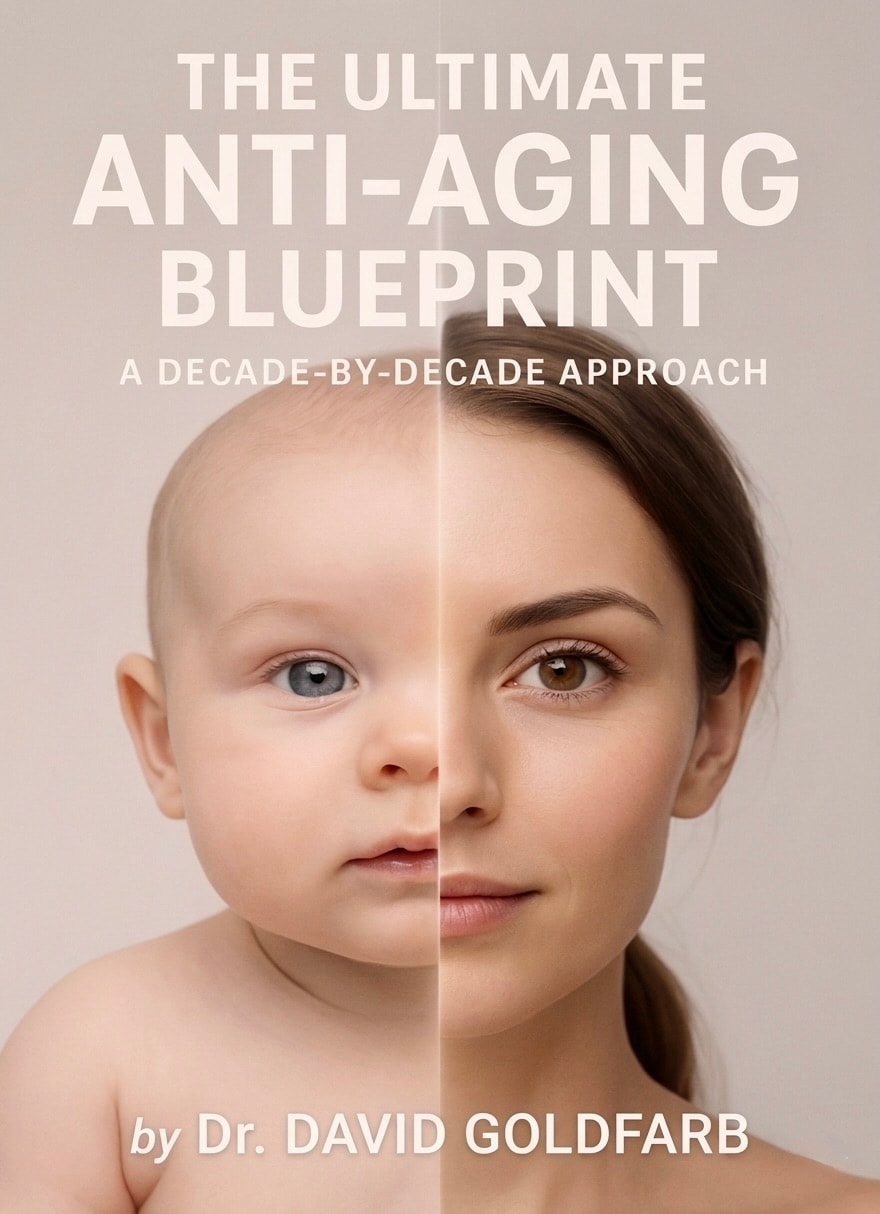
The Ultimate Anti-Aging Blueprint covers epigenetic drift as one of seven core mechanisms of aging, with context on what the research currently supports and what remains to be established.
Explore Topics
Written by
Dr. Goldfarb
Content creator and writer sharing insights and stories.