Muscle Mass and Longevity: Why Muscle Is Your Longevity Organ
Muscle is not just for athletes. It is a metabolically active organ that predicts lifespan, protects against disease, and determines your functional independence as you age.

Muscle Mass and Longevity: Why Muscle Is Your Longevity Organ
When most people think about muscle, they think about aesthetics or athletic performance. The longevity research tells a different story. Skeletal muscle is a metabolically active endocrine organ that plays central roles in glucose metabolism, immune function, inflammation regulation, and physical resilience. The amount of muscle you carry is one of the strongest predictors of how long you will live and how well you will function in the final decades of your life.
This is not a fringe position. It is increasingly mainstream in geriatric medicine and longevity research. Understanding why muscle matters, and what happens when you lose it, is foundational to any serious approach to aging well.
Sarcopenia: The Silent Epidemic
Sarcopenia is the age-related loss of skeletal muscle mass and function. It is one of the most consequential and underappreciated processes in aging.
The numbers are sobering:
- Muscle mass peaks in the late 20s to early 30s
- After age 30, adults lose approximately 3-8% of muscle mass per decade
- After age 60, the rate accelerates to 1-2% per year
- By age 80, many people have lost 30-40% of their peak muscle mass
Sarcopenia is not just about weakness. It is associated with insulin resistance, increased fall risk, fractures, disability, loss of independence, and significantly higher all-cause mortality.
A 2014 study in the American Journal of Medicine found that low muscle mass was associated with a nearly three-fold increase in all-cause mortality in older adults, independent of body fat percentage, cardiovascular risk factors, and other confounders.
Why Muscle Predicts Longevity
Glucose Metabolism and Insulin Sensitivity
Skeletal muscle is responsible for approximately 80% of insulin-stimulated glucose disposal. When you eat carbohydrates, the resulting glucose is primarily taken up by muscle cells. Muscle mass is therefore a major determinant of insulin sensitivity.
As muscle mass declines with age, the body's capacity to clear glucose diminishes. This is a primary driver of the age-related increase in insulin resistance and type 2 diabetes risk, independent of changes in diet or physical activity.
Maintaining muscle mass through resistance training is one of the most effective interventions for preserving insulin sensitivity with age.
The Muscle-Organ Crosstalk
Muscle is an endocrine organ that secretes signaling molecules called myokines during contraction. These myokines have wide-ranging effects on other organs:
IL-6 (from muscle): Paradoxically, the same IL-6 that drives inflammation when produced by fat tissue has anti-inflammatory effects when produced by contracting muscle. Exercise-induced IL-6 stimulates fat oxidation, improves insulin sensitivity, and has anti-tumor effects.
Irisin: A myokine that promotes the conversion of white fat to brown fat, improves brain health, and has been shown to reduce amyloid-beta accumulation in animal models of Alzheimer's disease.
BDNF (Brain-Derived Neurotrophic Factor): Produced by contracting muscle and the brain during exercise, BDNF promotes neurogenesis, synaptic plasticity, and cognitive function. It is one of the primary mechanisms linking exercise to brain health.
Myostatin inhibition: Muscle contraction suppresses myostatin, a protein that limits muscle growth. This creates a positive feedback loop: more muscle activity leads to less myostatin, which allows more muscle growth.
Physical Resilience and Functional Independence
Grip strength, a simple proxy for overall muscle strength, is one of the most consistent predictors of mortality in the medical literature. A 2015 Lancet study of nearly 140,000 adults across 17 countries found that grip strength was a stronger predictor of cardiovascular mortality than systolic blood pressure.
The mechanism is partly direct (stronger muscles protect against falls and fractures) and partly indirect (grip strength reflects overall muscle quality and metabolic health).
Functional independence in old age, the ability to get up from a chair, climb stairs, carry groceries, and live without assistance, depends on maintaining adequate muscle mass and strength. The threshold for functional independence is not high, but it requires active maintenance. People who do not strength train typically fall below it in their 70s or 80s.
Metabolic Reserve During Illness
Muscle serves as the body's primary amino acid reservoir. During illness, surgery, or prolonged bed rest, the body catabolizes muscle to provide amino acids for immune function, wound healing, and organ maintenance.
People with greater muscle mass have more metabolic reserve to draw on during these physiological stresses. This is why sarcopenic patients have dramatically worse outcomes after surgery, hospitalization, and critical illness than those with adequate muscle mass, a phenomenon called "sarcopenic obesity" when combined with excess fat.
The Anabolic Resistance Problem
After approximately age 40, muscle protein synthesis becomes less efficient in response to protein intake and exercise, a phenomenon called anabolic resistance. The same protein dose that stimulates robust muscle protein synthesis in a 25-year-old produces a blunted response in a 60-year-old.
This does not mean building or maintaining muscle is impossible after 40. It means the stimulus needs to be larger. Older adults need:
More protein per meal: Research suggests older adults need 35-40g of high-quality protein per meal to maximally stimulate muscle protein synthesis, compared to 20-25g in younger adults.
Higher training intensity: Lighter weights with higher reps can build muscle in younger adults; older adults appear to need heavier loads (above approximately 60-70% of one-rep maximum) to overcome anabolic resistance.
More leucine: Leucine is the amino acid that most potently triggers muscle protein synthesis via mTOR activation. Older adults benefit from leucine-rich protein sources (whey, eggs, meat) or leucine supplementation.
How to Preserve and Build Muscle After 40
Resistance Training: Non-Negotiable
Progressive resistance training is the most effective intervention for preserving and building muscle at any age. The research is unambiguous: older adults who resistance train maintain muscle mass, strength, and functional capacity far better than those who do not.
Key principles:
- Train all major muscle groups 2-3 times per week
- Use loads that are challenging (8-12 repetitions to near failure)
- Progress gradually, increasing weight or reps over time
- Compound movements (squats, deadlifts, rows, presses) provide the most efficient stimulus
A landmark 2011 study found that 12 weeks of resistance training in adults over 65 produced significant increases in muscle mass, strength, and functional capacity, demonstrating that meaningful adaptation is possible even in older adults.
Protein Intake
Adequate protein is essential for muscle protein synthesis. Current evidence suggests older adults need 1.2-1.6g of protein per kilogram of body weight per day, significantly more than the RDA of 0.8g/kg, which was set to prevent deficiency, not optimize muscle health.
Distribution matters: spreading protein intake across 3-4 meals of 30-40g each appears more effective for muscle protein synthesis than consuming the same total in one or two large meals.
Avoid Prolonged Inactivity
Even brief periods of inactivity cause rapid muscle loss in older adults. A 2015 study found that 10 days of bed rest in adults over 70 caused significant muscle loss that took months to recover. This has important implications for hospitalization and illness recovery.
Minimizing sedentary time and maintaining daily movement, even walking, helps preserve muscle mass between formal training sessions.
The Bottom Line
Muscle is not a vanity metric. It is a longevity organ that predicts survival, protects metabolic health, maintains functional independence, and provides physiological resilience during illness and stress.
The age-related loss of muscle (sarcopenia) is one of the most consequential processes in aging, and it is largely preventable with consistent resistance training and adequate protein intake. Starting earlier is better, but the research consistently shows that meaningful muscle preservation and even growth is possible at any age.
If you are not currently doing resistance training, starting is one of the highest-return investments you can make in your long-term health.
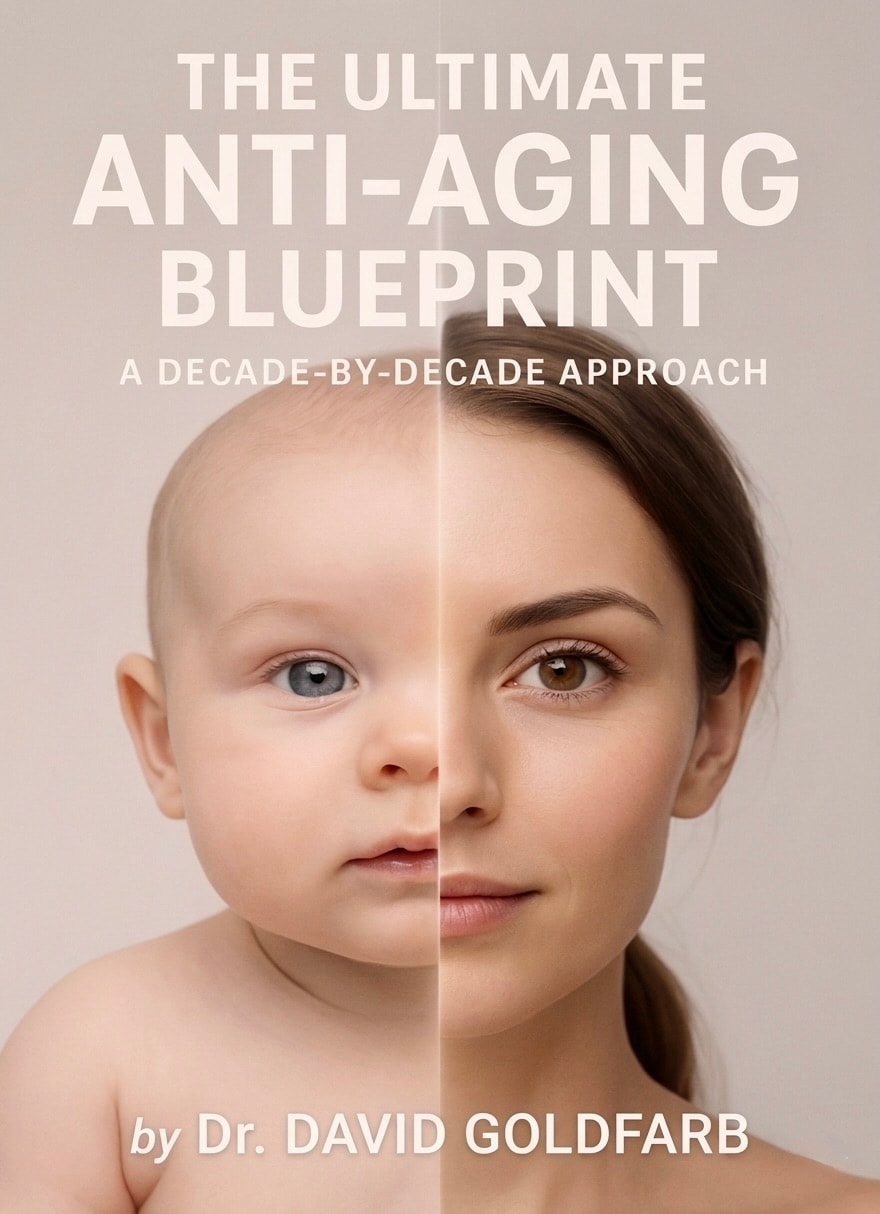
David Goldfarb, DO, FACS served for 26 years as Chief of Otolaryngology-Head & Neck Surgery at Penn Medicine Princeton Medical Center. His book, The Ultimate Anti-Aging Blueprint, covers the full spectrum of evidence-based longevity strategies.
Explore Topics
Written by
David Goldfarb, DO, FACS
Content creator and writer sharing insights and stories.