Inflammaging: The Slow Burn Behind Most Age-Related Disease
Chronic low-grade inflammation "inflammaging" underlies cardiovascular disease, Alzheimer's, cancer, and type 2 diabetes. Here's what the research says about it.

Inflammaging: The Slow Burn Behind Most Age-Related Disease
If you had to identify a single biological thread running through virtually every major age-related disease, it would be inflammation. Not the acute, visible kind the redness and swelling that follows an injury but a quieter, persistent, low-grade version that researchers have come to call "inflammaging."
The term was coined by immunologist Claudio Franceschi in the early 2000s, and it has since become one of the most studied concepts in geroscience. Understanding it changes how you think about aging and about the choices that either accelerate or slow it.
What Is Inflammaging?
Acute inflammation is a healthy, necessary response. When you cut your finger or fight off an infection, your immune system mounts a rapid, targeted response and then stands down. That resolution is as important as the activation.
Inflammaging is what happens when the immune system never fully stands down. It's a state of chronic, low-level immune activation that persists for years or decades without a specific trigger. There's no wound to heal, no pathogen to clear. The inflammatory signals just keep circulating.
This matters because inflammation, even at low levels, is biologically costly. It damages tissues, disrupts cellular signaling, accelerates telomere shortening, and creates an environment in which age-related diseases are more likely to take hold.
The Disease Connections
The research linking inflammaging to specific diseases is extensive and consistent across multiple study populations.
Cardiovascular disease: Atherosclerosis the buildup of plaques in arterial walls is now understood to be fundamentally an inflammatory process. Elevated markers like C-reactive protein (CRP) and interleukin-6 (IL-6) are independent predictors of heart attack risk, even after controlling for traditional risk factors like cholesterol.
Alzheimer's disease: Neuroinflammation inflammation within the brain is a defining feature of Alzheimer's pathology. Whether it's a cause or consequence of the disease is still debated, but the association is robust and has driven significant research interest in anti-inflammatory approaches to cognitive protection.
Type 2 diabetes: Chronic inflammation disrupts insulin signaling and contributes to the insulin resistance that precedes type 2 diabetes. Adipose tissue particularly visceral fat is itself a source of inflammatory cytokines, which helps explain why excess body fat is such a consistent risk factor.
Cancer: Inflammatory environments promote cellular mutations and suppress immune surveillance, the process by which the immune system identifies and destroys abnormal cells before they become tumors.
What Drives It?
Several factors contribute to the chronic inflammatory state that accumulates with age.
Senescent cells are a major source. As discussed elsewhere in this blog, senescent cells cells that have stopped dividing but haven't died release a cocktail of inflammatory signals called the senescence-associated secretory phenotype (SASP). As senescent cells accumulate with age, so does their inflammatory output.
Gut microbiome changes play a role as well. The composition of the gut microbiome shifts with age, and a less diverse microbiome is associated with increased intestinal permeability sometimes called "leaky gut" which allows bacterial products to enter the bloodstream and trigger immune responses.
Visceral adiposity fat stored around the organs is metabolically active in ways that subcutaneous fat is not. It secretes pro-inflammatory cytokines directly into the portal circulation, creating a chronic inflammatory burden that scales with the amount of visceral fat present.
Chronic psychological stress activates the hypothalamic-pituitary-adrenal (HPA) axis and the sympathetic nervous system, both of which have downstream effects on immune function and inflammatory signaling.
Poor sleep is another well-documented driver. Even a single night of sleep deprivation measurably elevates inflammatory markers. Chronic sleep insufficiency creates a sustained pro-inflammatory state.
What the Research Supports
The good news is that inflammaging is not simply an inevitable consequence of getting older. The lifestyle factors that drive it are largely modifiable.
Dietary patterns have the most extensive evidence base. The Mediterranean diet characterized by high intake of vegetables, legumes, whole grains, fish, and olive oil consistently reduces inflammatory markers in clinical trials. The anti-inflammatory effect appears to be driven by a combination of antioxidants, omega-3 fatty acids, and fiber that feeds beneficial gut bacteria.
Physical activity reduces circulating inflammatory markers through multiple mechanisms, including reduced visceral fat, improved insulin sensitivity, and direct anti-inflammatory effects of muscle contraction. The evidence here is strong and consistent across age groups.
Sleep optimization is underappreciated as an anti-inflammatory intervention. Prioritizing sleep duration and quality addressing sleep apnea, maintaining consistent sleep timing, reducing light exposure at night has measurable effects on inflammatory biomarkers.
Stress management matters as well. Chronic psychological stress is a genuine driver of inflammaging, and interventions that reduce it whether through social connection, mindfulness practice, or simply addressing the sources of stress have biological effects, not just subjective ones.
Measuring Inflammation
If you're curious about your own inflammatory status, several blood markers are clinically available. High-sensitivity CRP (hs-CRP) is the most commonly used. IL-6 and fibrinogen are also informative. These aren't part of a standard annual physical, but they're worth requesting if you have cardiovascular risk factors or a family history of inflammatory disease.
A single measurement is less informative than a trend over time. What you're looking for is a direction of travel, not a single data point.
The Takeaway
Inflammaging is not a disease you either have or don't have. It's a spectrum a biological environment that either supports healthy aging or undermines it. The research is clear that this environment is substantially shaped by choices that are within your control.
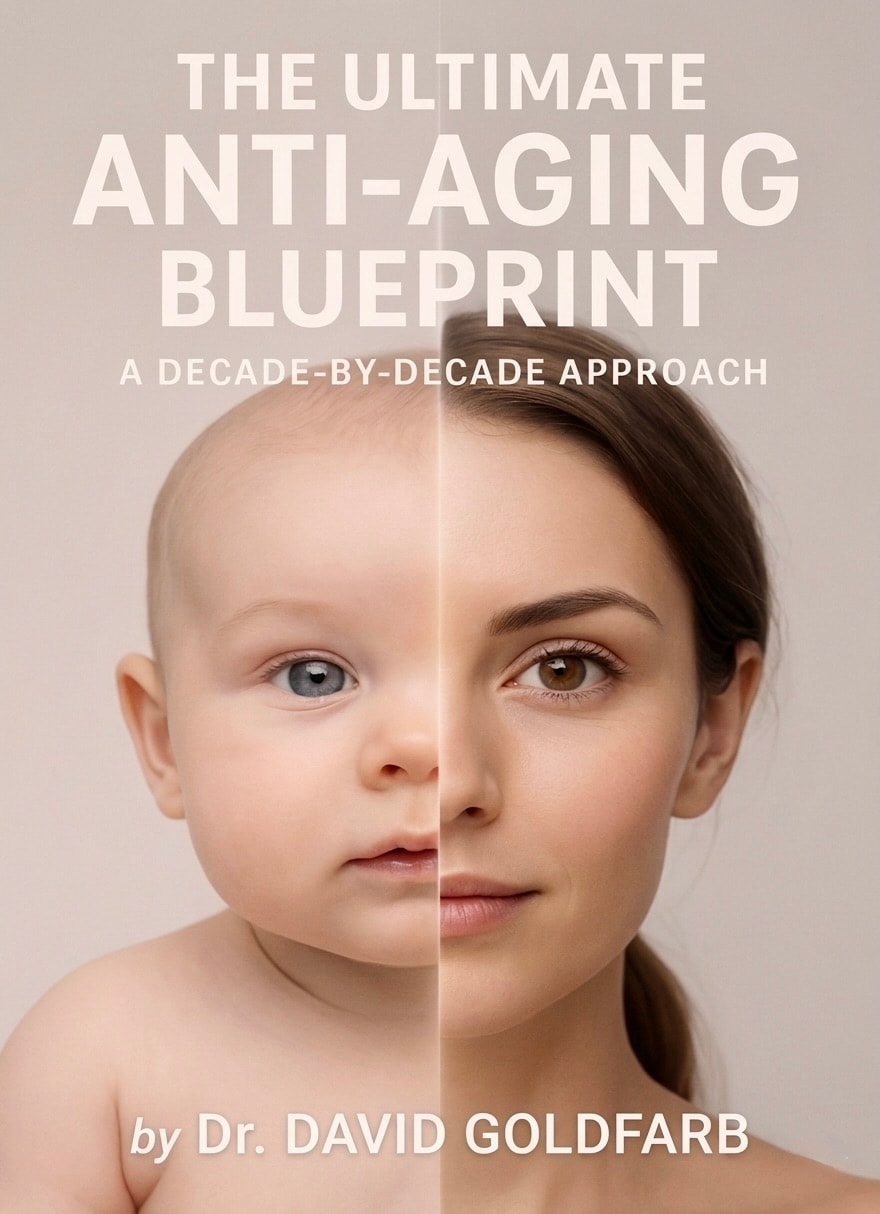
The Ultimate Anti-Aging Blueprint covers inflammaging as one of seven core mechanisms of aging, with decade-specific guidance on the interventions that matter most at each stage of life.
Explore Topics
Written by
Dr. Goldfarb
Content creator and writer sharing insights and stories.