Intermittent Fasting and Aging: What the Evidence Shows
Intermittent fasting is one of the most studied dietary interventions in longevity research. Here is an honest look at what the science actually supports in humans.

Intermittent Fasting and Aging: What the Evidence Shows
Few dietary interventions have generated as much scientific interest, or as much popular hype, as intermittent fasting. The animal data is genuinely impressive. The human data is more nuanced. Understanding the difference matters if you are trying to make evidence-based decisions about your health.
This post covers what intermittent fasting is, what the research actually shows in humans, and how to think about it as part of a longevity-focused lifestyle.
What Is Intermittent Fasting?
Intermittent fasting (IF) is not a diet in the traditional sense. It is a pattern of eating that cycles between periods of eating and fasting. The most common protocols include:
16:8 (Time-Restricted Eating): Eating within an 8-hour window, fasting for 16 hours. The most widely practiced form.
5:2: Eating normally five days per week, restricting calories to 500-600 on two non-consecutive days.
Alternate Day Fasting: Alternating between normal eating days and fasting or very-low-calorie days.
Prolonged Fasting: 24-72 hour fasts, typically done monthly or quarterly. Less common, more studied for autophagy induction.
The Animal Evidence: Compelling but Not Directly Translatable
The longevity effects of caloric restriction and fasting in animal models are among the most replicated findings in biology. Caloric restriction extends lifespan in yeast, worms, flies, and rodents, sometimes dramatically. Intermittent fasting produces similar effects in rodents even without overall caloric restriction.
The mechanisms are well-characterized: fasting activates AMPK, inhibits mTOR, induces autophagy, reduces IGF-1 signaling, and improves insulin sensitivity. These are all pathways strongly implicated in aging.
The problem is that humans are not rodents. We have much longer lifespans, different metabolic rates, and different evolutionary pressures around food availability. The translation from animal models to human longevity outcomes has been inconsistent across many interventions in biology.
The Human Evidence: What We Actually Know
Metabolic Benefits Are Real
The strongest human evidence for intermittent fasting is in metabolic health. Multiple randomized controlled trials have shown that time-restricted eating (typically 16:8 or 14:10) improves fasting insulin and insulin sensitivity, fasting glucose, blood pressure, triglycerides, and LDL particle size.
A 2020 study in Cell Metabolism by Sutton et al. found that early time-restricted eating (eating between 7 AM and 3 PM) improved insulin sensitivity, blood pressure, and oxidative stress in men with prediabetes, without caloric restriction.
These metabolic improvements are meaningful for longevity because insulin resistance and metabolic syndrome are among the strongest drivers of age-related disease.
Weight Loss: Modest and Mostly Explained by Caloric Restriction
Most of the weight loss seen with intermittent fasting in human trials is explained by reduced caloric intake. People simply eat less when their eating window is compressed. When calories are carefully matched between IF and continuous caloric restriction groups, the weight loss outcomes are similar.
A 2022 NEJM study comparing time-restricted eating to standard caloric restriction found no significant difference in weight loss or metabolic markers after one year. This does not mean IF is ineffective. It means its weight effects are largely mediated through caloric reduction, not through unique metabolic magic.
Autophagy: Promising but Understudied in Humans
Autophagy, the cellular recycling process that clears damaged proteins and organelles, is one of the most compelling proposed mechanisms for fasting's longevity effects. The 2016 Nobel Prize in Physiology or Medicine was awarded to Yoshinori Ohsumi for his work on autophagy mechanisms.
Fasting robustly induces autophagy in animal models. In humans, the evidence is more limited. We know autophagy is induced during fasting, but we do not yet have reliable biomarkers to measure it clinically, and we do not have long-term human data linking fasting-induced autophagy to longevity outcomes.
What we can say is that the mechanistic case is strong, and the absence of evidence is partly a measurement problem rather than evidence of absence.
Longevity Outcomes: No Direct Human Data Yet
There are no randomized controlled trials showing that intermittent fasting extends human lifespan. This is not a criticism of IF. There are no such trials for any dietary intervention, because they would require decades and enormous resources. The longevity evidence for IF in humans is indirect: improved biomarkers, reduced disease risk factors, and mechanistic plausibility from animal and cellular research.
Timing Matters: Early vs. Late Eating Windows
One of the more interesting findings in recent IF research is that the timing of the eating window appears to matter, not just its duration. Studies consistently show that eating earlier in the day, aligning food intake with circadian rhythms, produces better metabolic outcomes than the same eating window shifted later.
A 2019 study in Obesity found that early time-restricted eating (8 AM to 2 PM) improved insulin sensitivity, blood pressure, and appetite regulation compared to a control group eating the same calories over a 12-hour window.
This aligns with what we know about circadian biology: insulin sensitivity is highest in the morning and declines through the day. Eating most of your calories early leverages this natural rhythm.
The practical implication: if you practice 16:8, finishing your last meal by 6-7 PM is likely more beneficial than the common pattern of skipping breakfast and eating from noon to 8 PM.
Who Should Be Cautious
Intermittent fasting is not appropriate for everyone:
- People with a history of eating disorders: structured fasting can trigger disordered eating patterns
- Pregnant or breastfeeding women: increased nutritional demands make fasting inappropriate
- People with type 1 diabetes: fasting requires careful medical supervision due to hypoglycemia risk
- Underweight individuals: further caloric restriction is contraindicated
- People on certain medications: some drugs require food; consult your physician
Older adults should also be cautious about fasting protocols that significantly reduce protein intake, as sarcopenia risk increases with age and adequate protein distribution throughout the day is important for muscle protein synthesis.
Practical Guidance
If you want to incorporate intermittent fasting based on the current evidence, a reasonable approach is:
Start with 14:10. A 14-hour fast with a 10-hour eating window is achievable for most people and captures most of the metabolic benefits without the difficulty of strict 16:8.
Shift your window earlier. Aim to finish eating by 7 PM rather than later. This aligns with circadian biology and appears to produce better outcomes.
Prioritize protein within your window. Especially if you are over 40, ensure you are meeting protein targets (0.7-1.0g per pound of body weight) within your eating window to protect muscle mass.
Do not use fasting to justify poor food quality. The quality of what you eat during your eating window matters as much as the timing. A 16:8 window filled with ultra-processed food is not a longevity strategy.
The Bottom Line
Intermittent fasting has genuine metabolic benefits supported by human evidence, particularly for insulin sensitivity, blood pressure, and inflammatory markers. The longevity mechanisms are compelling and well-supported in animal models. The direct human longevity data does not yet exist, but that is true of virtually every dietary intervention.
For most healthy adults, a moderate time-restricted eating approach (14:10 or 16:8 with an early window) is a reasonable, low-risk addition to a longevity-focused lifestyle. It is not magic, and it is not necessary, but the evidence supports it as a useful tool.
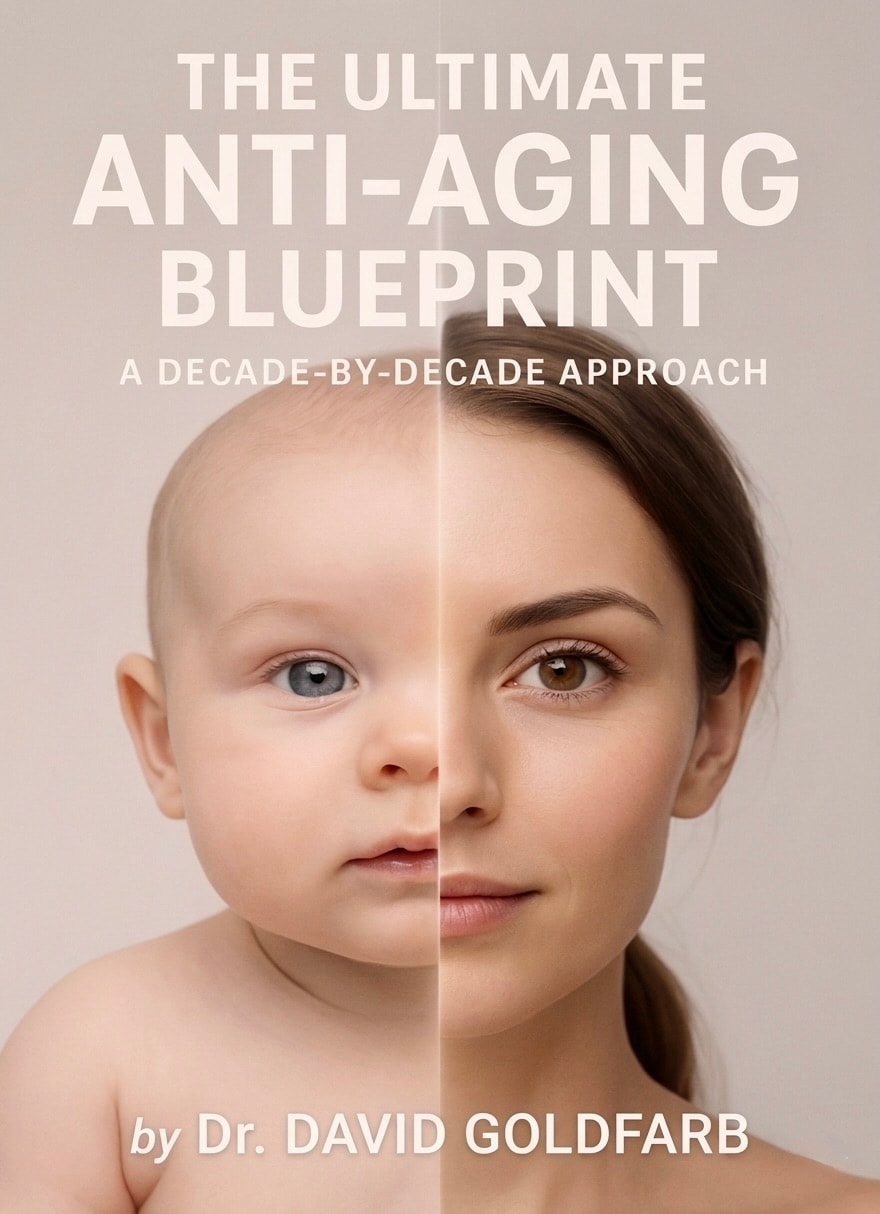
David Goldfarb, DO, FACS served for 26 years as Chief of Otolaryngology-Head & Neck Surgery at Penn Medicine Princeton Medical Center. His book, The Ultimate Anti-Aging Blueprint, covers the full spectrum of evidence-based longevity strategies.
Explore Topics
Written by
David Goldfarb, DO, FACS
Content creator and writer sharing insights and stories.