Protein and Muscle After 40: Why Your Requirements Have Changed
The protein recommendations most people follow were designed for young adults. After 40, the biology of muscle protein synthesis changes in ways that make higher protein intake and smarter distribution genuinely important.

Protein and Muscle After 40: Why Your Requirements Have Changed
The standard dietary protein recommendation in the United States is 0.8 grams per kilogram of body weight per day. This number was established to prevent deficiency in healthy young adults. It was not designed to optimize muscle preservation in aging adults, and a growing body of research suggests it is inadequate for that purpose.
After 40, the biology of muscle protein synthesis changes in ways that make both the amount and the distribution of protein intake genuinely important. Understanding these changes is one of the most practical things you can do for your long-term health.
What Is Anabolic Resistance?
When you eat protein, amino acids enter the bloodstream and stimulate muscle protein synthesis, the process by which muscle tissue is built and repaired. In young adults, this response is robust: a moderate protein meal produces a strong anabolic signal.
With age, this response becomes blunted. Older muscle tissue requires a larger amino acid stimulus to produce the same anabolic response. This phenomenon is called anabolic resistance, and it is one of the primary drivers of age-related muscle loss.
Anabolic resistance means that the same protein intake that maintains muscle mass in a 25-year-old may be insufficient to maintain muscle mass in a 55-year-old. The muscle is not broken; it is simply less sensitive to the signal. A larger signal is needed to produce the same response.
What the Research Shows About Protein Requirements
Multiple research groups have investigated protein requirements in older adults, and the findings consistently point in the same direction: older adults need more protein than the current RDA suggests.
A 2013 position paper from the PROT-AGE Study Group, a group of international nutrition experts, recommended that healthy older adults consume 1.0-1.2 grams of protein per kilogram of body weight per day, with higher amounts (1.2-1.5 g/kg/day) for those who are physically active or have acute or chronic illness. This is 25-50% higher than the standard RDA.
A 2016 meta-analysis in the American Journal of Clinical Nutrition found that protein supplementation significantly increased muscle mass and strength gains from resistance training in older adults, with larger effects in older participants than younger ones, consistent with the anabolic resistance model.
For a 70 kg (154 lb) person, the difference between the RDA (56g/day) and the PROT-AGE recommendation (70-84g/day) is meaningful and achievable through diet.
Leucine: The Key Amino Acid
Not all protein is equal in its anabolic signaling. Leucine, a branched-chain amino acid, is the primary trigger for muscle protein synthesis. It activates the mTOR pathway, which initiates the cellular machinery for building muscle protein.
Older muscle requires a higher leucine threshold to trigger maximal muscle protein synthesis. This is part of the mechanism of anabolic resistance. Animal proteins (meat, fish, eggs, dairy) are generally higher in leucine than plant proteins, which is one reason why protein source matters, not just total protein quantity.
For people relying primarily on plant proteins, achieving adequate leucine requires either higher total protein intake or strategic use of leucine-rich plant sources (soy, legumes) or leucine supplementation. This is not an argument against plant-based diets; it is an argument for being intentional about protein quality within them.
Distribution Matters as Much as Total Intake
One of the most practically important findings in protein research is that how protein is distributed across the day matters, not just the total daily amount.
Many people consume most of their daily protein at dinner, with relatively little at breakfast and lunch. Research suggests this pattern is suboptimal for muscle protein synthesis, particularly in older adults.
Each meal provides an independent opportunity to stimulate muscle protein synthesis. A meal with insufficient protein (below approximately 25-30g in older adults) may not reach the leucine threshold needed to trigger a maximal anabolic response. Spreading protein intake more evenly across meals, with each meal containing 25-40g of high-quality protein, appears to produce better muscle protein synthesis outcomes than the same total protein concentrated in one or two meals.
A practical target: aim for 25-40g of protein at each of three meals, rather than 10g at breakfast, 15g at lunch, and 60g at dinner.
Protein Timing Around Exercise
The relationship between protein intake and resistance training is synergistic. Resistance training sensitizes muscle to amino acids, and protein intake provides the substrate for muscle repair and growth.
The concept of an anabolic window, a narrow post-exercise period during which protein must be consumed, has been somewhat overstated in popular fitness culture. The window is real but wider than often claimed, probably 2-4 hours rather than 30 minutes. What matters more is that total daily protein is adequate and that a protein-containing meal or snack is consumed within a few hours of resistance training.
For older adults, pre-exercise protein consumption may also be beneficial, as it ensures amino acid availability during the exercise session itself.
Practical Guidance
Calculate your target. For adults over 40 who are physically active, a target of 1.2-1.6g of protein per kilogram of body weight per day is supported by the research. For a 70 kg person, that is 84-112g per day.
Prioritize protein at breakfast. This is where most people fall short. Eggs, Greek yogurt, cottage cheese, smoked salmon, or a protein shake are practical ways to reach 25-30g at the first meal of the day.
Choose high-quality sources. Animal proteins (eggs, dairy, meat, fish) have high leucine content and complete amino acid profiles. If you eat primarily plant-based, prioritize soy, legumes, and consider whether total protein intake is sufficient to compensate for lower leucine density.
Pair protein with resistance training. The combination of adequate protein and resistance training is more effective than either alone for preserving muscle mass. Neither substitutes for the other.
Adjust for body composition goals. If you are trying to lose weight, maintaining high protein intake during caloric restriction is particularly important, as caloric restriction accelerates muscle loss. Higher protein intake during weight loss helps preserve lean mass.
The Bigger Picture
Protein is not a magic bullet, and more is not always better. Very high protein intakes (above 2.5g/kg/day) do not appear to provide additional muscle benefits and may place unnecessary burden on the kidneys in people with existing kidney disease.
But for most adults over 40, the evidence suggests that current protein intake is more likely to be too low than too high, and that modest increases in protein quantity and improvements in distribution can meaningfully support muscle preservation, metabolic health, and functional independence over time.
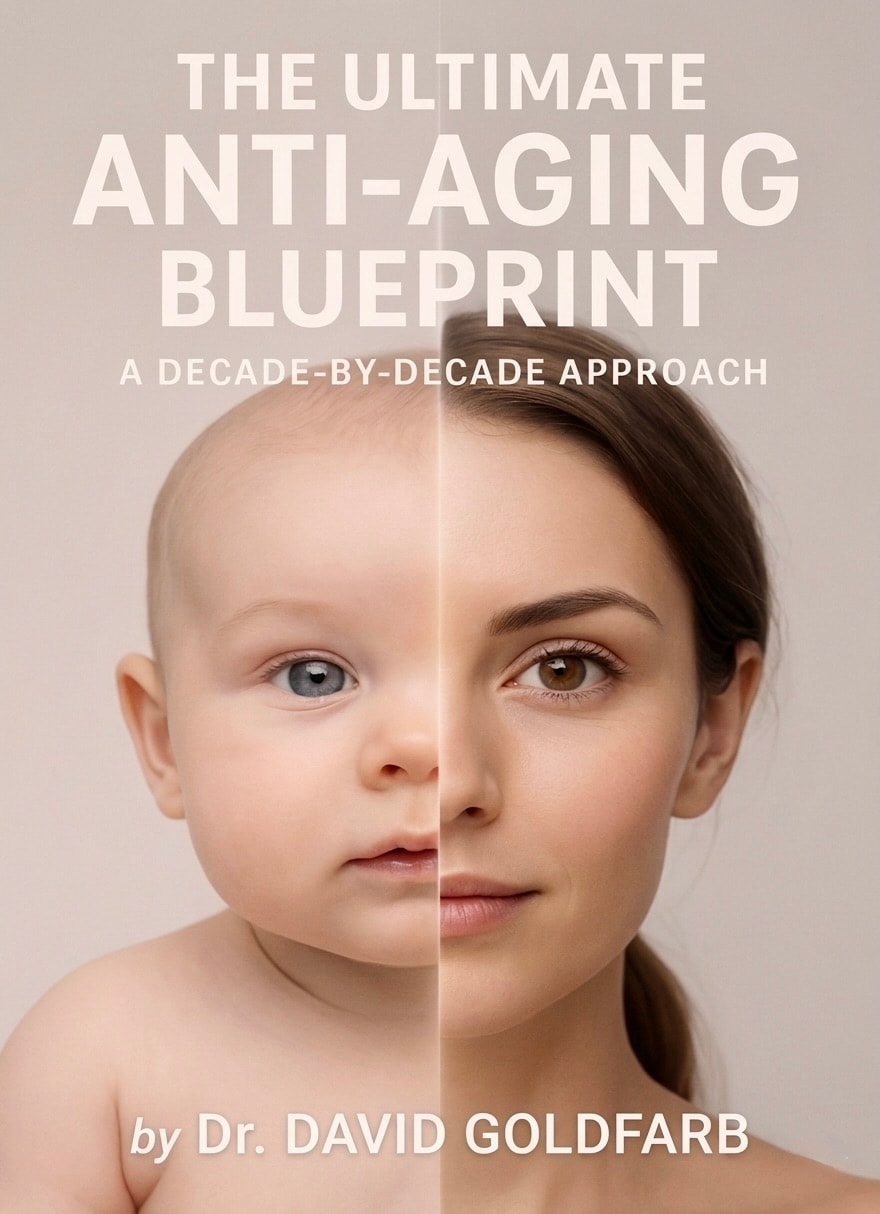
The Ultimate Anti-Aging Blueprint covers protein and nutrition as part of the decade-specific longevity framework, with practical guidance on dietary approaches that support muscle health at every stage of life.
Explore Topics
Written by
David Goldfarb, DO, FACS
Content creator and writer sharing insights and stories.