Purpose and Longevity: Why Having a Reason to Live Longer Helps You Do It
A strong sense of purpose reduces mortality risk by up to 50% in some studies. The science of meaning and longevity is more robust than most people realize.

Purpose and Longevity: Why Having a Reason to Live Longer Helps You Do It
In every Blue Zone, the five regions of the world with extraordinary concentrations of centenarians, researchers found a consistent feature that had nothing to do with diet, exercise, or supplements: a strong sense of purpose. Okinawans call it ikigai. Nicoyans call it plan de vida. The concept is the same: a clear reason to get up in the morning.
The research on purpose and longevity is more robust than most people expect. The effect sizes are large, the findings replicate across cultures and age groups, and the biological mechanisms are increasingly well-characterized. This is not soft psychology. It is measurable physiology.
The Evidence Base
The Rush Memory and Aging Project
One of the most cited studies on purpose and longevity is a 2009 paper by Patricia Boyle and colleagues from the Rush Memory and Aging Project, published in Psychosomatic Medicine. The study followed 1,238 older adults without dementia for up to 5 years, measuring purpose in life at baseline.
The findings: participants with high purpose scores had a 57% lower risk of all-cause mortality compared to those with low purpose scores. This association persisted after adjusting for depressive symptoms, neuroticism, disability, chronic conditions, and other confounders.
A follow-up study from the same cohort found that high purpose was associated with a 2.4-fold lower risk of Alzheimer's disease and a significantly lower rate of mild cognitive impairment.
The MIDUS Study
The Midlife in the United States (MIDUS) study, a large longitudinal study of American adults, has produced multiple findings linking purpose to health outcomes. A 2014 analysis in Psychological Science found that higher purpose was associated with reduced all-cause mortality over a 14-year follow-up, with an effect size comparable to not smoking.
The same dataset showed that purpose was associated with lower rates of cardiovascular events, stroke, and sleep disturbances, independent of other psychological and behavioral factors.
International Replication
The purpose-longevity link has been replicated in multiple countries and cultures. A 2019 study in JAMA Network Open analyzed data from over 6,000 Americans aged 50 and older and found that low purpose was associated with more than double the mortality risk over a 5-year follow-up.
Studies from Japan have found that ikigai, having a sense of purpose or meaning, is associated with lower all-cause mortality, lower cardiovascular mortality, and lower risk of disability in older adults. A 2008 study in Psychosomatic Medicine found that Japanese adults who reported having ikigai had significantly lower mortality over a 7-year follow-up.
The Biological Mechanisms
The purpose-longevity link is not purely psychological. There are well-characterized biological pathways through which a sense of purpose affects physiology.
Stress Response Regulation
People with higher purpose show more adaptive stress responses. They have lower cortisol reactivity to acute stressors, faster cortisol recovery after stress, and lower baseline inflammatory markers. This is physiologically meaningful: chronic cortisol elevation and chronic inflammation are primary drivers of biological aging.
A 2013 study found that higher purpose was associated with lower levels of interleukin-6 (IL-6) and C-reactive protein (CRP), key inflammatory markers, independent of health behaviors and demographic factors.
Autonomic Nervous System Function
Purpose is associated with better heart rate variability (HRV), a measure of autonomic nervous system flexibility that is strongly associated with cardiovascular health and longevity. Higher HRV reflects a more adaptive balance between sympathetic and parasympathetic nervous system activity.
Health Behaviors
People with strong purpose engage in more health-promoting behaviors: they exercise more, sleep better, eat better, and are more likely to seek preventive medical care. This behavioral pathway likely accounts for some, but not all, of the mortality benefit.
Importantly, studies that control for health behaviors still find significant purpose effects on mortality, suggesting that purpose has direct physiological effects beyond its influence on behavior.
Telomere Length
Several studies have found associations between purpose and longer telomeres, a marker of cellular aging. A 2015 study found that higher purpose was associated with longer telomere length in older adults, independent of age, sex, and health behaviors.
Brain Health
Purpose appears to be neuroprotective. The Rush Memory and Aging Project findings on Alzheimer's risk are striking: high purpose was associated with a 2.4-fold lower risk of Alzheimer's disease. The proposed mechanisms include reduced amyloid-beta accumulation, better cognitive reserve, and lower neuroinflammation.
Post-mortem studies from the Rush cohort found that people with high purpose had the same amount of Alzheimer's pathology (amyloid plaques and tau tangles) as those with low purpose, but showed less cognitive impairment. This suggests that purpose may build cognitive reserve that allows the brain to function better despite pathological burden.
What Purpose Is (and Is Not)
Purpose is not the same as happiness, though they are correlated. Happiness is a hedonic state, feeling good in the moment. Purpose is eudaimonic, a sense of meaning, direction, and contribution that persists through difficulty.
Research by Carol Ryff and others has found that eudaimonic well-being (purpose, meaning, personal growth) is more consistently associated with health outcomes than hedonic well-being (positive affect, life satisfaction). You can have a meaningful life that involves significant struggle and still derive the health benefits of purpose.
Purpose is also not the same as having goals. Goals are specific targets; purpose is the broader sense of why those goals matter. "I want to run a 5K" is a goal. "I want to stay physically capable so I can be present for my grandchildren" is purpose.
Purpose Across the Lifespan
The relationship between purpose and health appears across all age groups, but the mechanisms and expressions of purpose shift with age.
In midlife, purpose is often tied to career, parenting, and community contribution. The research on purpose and health is particularly strong in this period. Midlife purpose predicts health outcomes decades later.
In older adulthood, purpose often shifts toward legacy, mentorship, and contribution to family and community. Retirement, which removes a major source of purpose for many people, is associated with accelerated cognitive decline and increased mortality risk in some studies, particularly for people who retire early without replacing work-derived purpose with other meaningful activities.
The Okinawan moai system, groups of five lifelong friends who commit to mutual support, provides purpose through relationship and community contribution well into old age. This structural embedding of purpose in social relationships may be one reason Okinawa's traditional population achieved such extraordinary longevity.
How to Cultivate Purpose
Unlike some longevity interventions, purpose cannot be prescribed in a dose. But the research suggests several approaches that support its development:
Identify your values. Purpose is grounded in what matters most to you. Clarifying your core values through reflection, journaling, or conversation provides the foundation for purposeful action.
Contribute to something larger than yourself. Volunteering, mentorship, community involvement, and caregiving are consistently associated with higher purpose and better health outcomes. A 2013 study found that volunteering was associated with lower mortality, but only when motivated by other-oriented rather than self-oriented reasons.
Maintain social roles. Purpose is often relational. It comes from being needed by others. Maintaining meaningful roles as parent, grandparent, mentor, friend, or community member sustains purpose across the lifespan.
Engage in meaningful work. This does not require a prestigious career. Meaningful work is work that aligns with your values and contributes to something you care about, whether paid or unpaid.
Address depression. Depression and low purpose are bidirectionally related. Depression suppresses the capacity for meaning-making. Treating depression through therapy, medication, exercise, or other evidence-based approaches can restore the capacity for purpose.
The Bottom Line
The science of purpose and longevity is among the most consistent and compelling in all of medicine. A strong sense of meaning and direction reduces all-cause mortality, cardiovascular disease, dementia risk, and cellular aging through both behavioral and direct physiological mechanisms.
This is not a soft finding. The effect sizes are large, the findings replicate across cultures, and the biological mechanisms are increasingly well-characterized. Purpose belongs in the same conversation as exercise, sleep, and diet as a core pillar of longevity.
The Blue Zone populations did not achieve their extraordinary longevity through individual optimization alone. They lived in environments and cultures that embedded purpose in daily life through family, community, faith, and meaningful work. That structural insight is harder to replicate than any supplement, but it is probably the more important lesson.
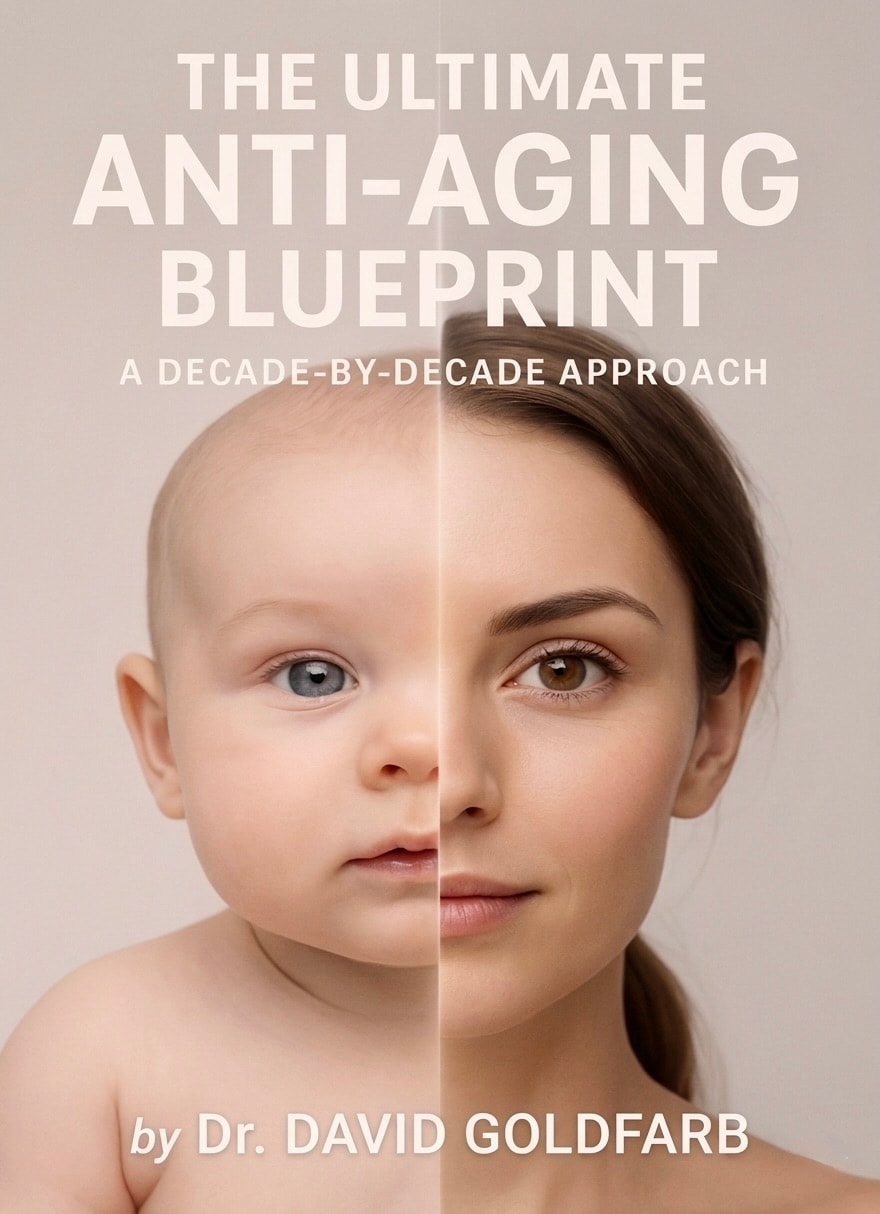
David Goldfarb, DO, FACS served for 26 years as Chief of Otolaryngology-Head & Neck Surgery at Penn Medicine Princeton Medical Center. His book, The Ultimate Anti-Aging Blueprint, covers the full spectrum of evidence-based longevity strategies.
Explore Topics
Written by
David Goldfarb, DO, FACS
Content creator and writer sharing insights and stories.